Foam vs Fiberglass Attic Insulation for Older Homes: Full Guide
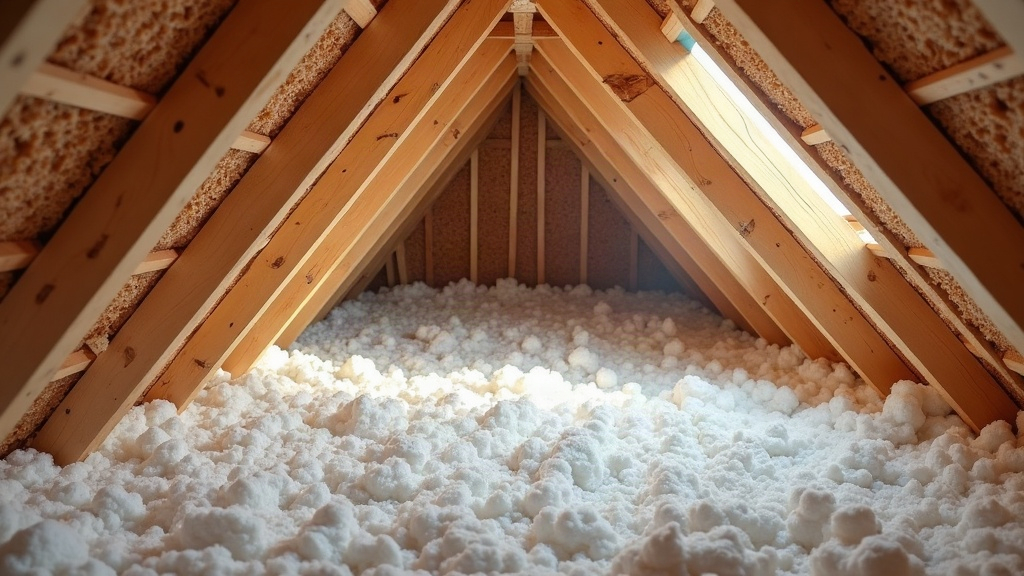
If your house was built before, say, 1985, and your attic feels like an oven in July and a meat locker in January, that’s not just your imagination. Comparing foam and fiberglass insulation for older attics really comes down to three things: how badly your attic needs air sealing, what your budget looks like, and how your roof deck handles moisture. The short version: fiberglass is cheaper and simpler to install, spray foam seals gaps far more effectively and holds up better in those odd, leaky old attics, but you’ll pay a lot more for it upfront.
Why Older Homes Need Special Attention
Homes built before the 1980s usually got minimal insulation when they were constructed, sometimes none at all. After decades of moisture cycles, pest activity, and the occasional renovation, a lot of that original material has settled, gapped, or just flattened out. Older attics tend to come with their own baggage, too:
- Irregular framing and joist spacing that doesn’t match modern standards
- Knob-and-tube or outdated wiring that restricts which insulation materials are safe to use
- Roof leaks or ventilation problems that predate the current owner
- A surprising number of air leaks around chimneys, recessed lighting, and plumbing stacks
So the “best” insulation isn’t just about chasing a high R-value. It’s about how well the material copes with an attic that’s far from perfect.
Fiberglass Insulation: The Budget-Friendly Classic
Fiberglass shows up as batts or loose-fill (blown-in), and it’s still the most common choice for attics across the U.S.
Pros:
- Cheaper on both materials and labor, typically $1 to $2 per square foot installed
- Non-combustible, and it won’t feed mold growth on its own
- Simple to layer on top of whatever insulation is already up there
- DIY-friendly if you’re blowing in loose-fill with rented equipment from the hardware store
Cons:
- Doesn’t air-seal anything. Gaps and drafts stick around unless you seal them separately first
- Loses R-value fast if it gets compressed, damp, or sloppily installed
- Lower R-value per inch than foam, roughly R-2.2 to R-2.7
If your roof deck is in decent shape and air leakage isn’t severe, fiberglass paired with proper sealing (caulk, foam gaskets, weatherstripping around penetrations) can be a smart, budget-conscious upgrade.
Spray Foam Insulation: The Air-Sealing Powerhouse
Spray foam, whether open-cell or closed-cell polyurethane, expands on contact and fills every crack, gap, and awkward cavity. That’s basically a description of what older attics are full of.
Pros:
- Insulates and air-seals at the same time, in one pass
- Much higher R-value per inch, from R-3.5 up to R-6.5 depending on the type
- Cuts down moisture infiltration and can genuinely improve indoor air quality
- Handles weird framing, ancient chimneys, and skylights without much fuss
Cons:
- Costs considerably more, usually $3 to $7+ per square foot installed
- Needs a professional crew, not a weekend DIY job
- Closed-cell foam can trap moisture if nobody checked the roof deck’s condition beforehand
- Makes it harder to inspect or run new wiring down the road
Which Option Makes More Sense for Your Older Home?
Before you commit, run through these questions:
- Is your attic floor mostly flat and easy to walk on? Fiberglass batts or blown-in insulation will do the job just fine.
- Are you dealing with real air leakage, like drafts, ice dams, or rooms that never hold a consistent temperature? Spray foam’s sealing ability usually fixes this faster than fiberglass alone ever could.
- What’s your budget per square foot? If money’s the deciding factor, fiberglass plus solid air sealing can get you something like 80% of the benefit for a fraction of the cost.
- Do you have old wiring, or plan to get into the attic again later? Fiberglass is much easier to pull back and reinstall when an electrician needs access.
A lot of contractors push a hybrid approach: a thin pass of closed-cell spray foam at the rim joists, chimney chases, and other major gaps, then blown-in fiberglass or cellulose on top for bulk R-value without blowing the budget.
Real-World Cost Example
Take a 1,200 square foot attic in an older house as an example:
- Fiberglass blown-in (R-38): around $1,800 to $2,400 installed
- Closed-cell spray foam (R-38 equivalent): around $6,000 to $9,000 installed
- Hybrid approach: around $3,500 to $5,000, which blends decent sealing with a more manageable price tag
Conclusion
There isn’t one insulation that wins for every older home, it depends on your attic’s actual condition, your budget, and how bad your air leaks really are. Fiberglass stays the practical, wallet-friendly pick for straightforward attics. Spray foam earns its keep in leaky, oddly shaped spaces where sealing matters just as much as the R-value. And honestly, for a lot of homeowners, a hybrid setup ends up being the sweet spot, so it’s worth getting quotes for both before you sign anything.