Fixing a Kitchen Faucet That Drips Only Under High Water Pressure
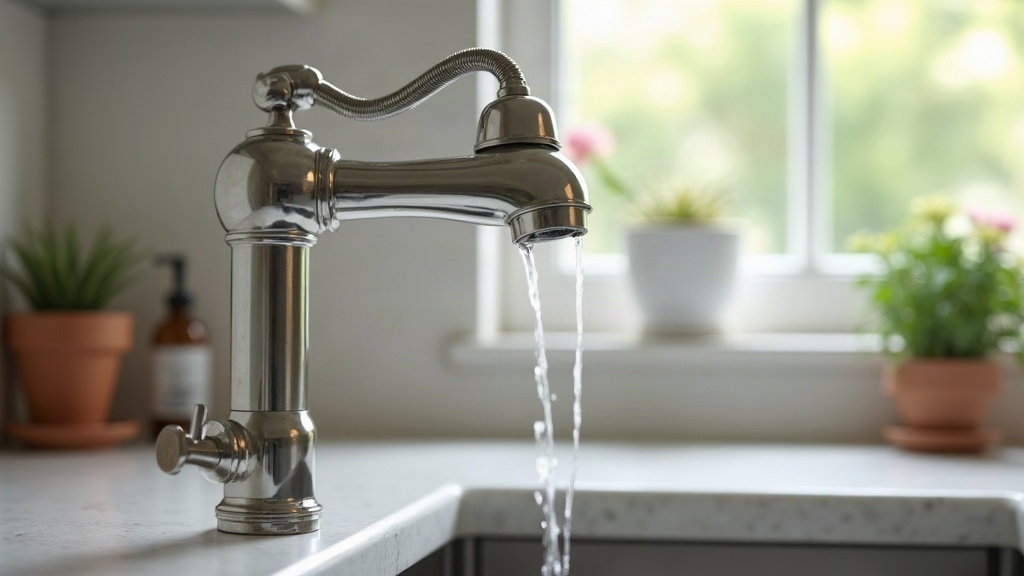
If your kitchen faucet only drips when water pressure spikes (early morning, late at night, or right after the dishwasher kicks off), the culprit usually isn’t a basic worn-out washer. It’s almost always a plumbing pressure issue paired with a component inside the faucet that’s just barely hanging on. Here’s why pressure-triggered drips happen and how to actually fix them, not just patch them for a month.
Why Does the Faucet Only Drip Under High Pressure?
A faucet that’s fine at normal pressure but starts dripping when pressure climbs has a seal or washer that’s almost sealing. Low pressure just doesn’t push hard enough to force water through the gap. High pressure does. A few usual suspects:
- Municipal pressure surges (often worst overnight, when fewer people in the neighborhood are running water)
- A failing pressure-reducing valve (PRV) letting spikes sneak through
- Thermal expansion after the water heater cycles, which briefly raises pressure
- A neighbor’s irrigation system or well pump kicking on nearby
If your home’s static pressure is sitting above 80 psi, it’s putting strain on every fixture in the house, not just that one faucet. Check this first before you touch anything else.
Step 1: Check Your Home’s Water Pressure
Grab a cheap pressure gauge (under $15) that screws onto an outdoor spigot or a washing machine hookup.
- Normal range: 40–60 psi
- Problem zone: 80 psi or higher
If you’re consistently reading above 80, install or replace the pressure-reducing valve near your main line. This one fix often clears up drips in several fixtures at once, not just the kitchen.
Step 2: Identify Your Faucet Type
Pop open the handle assembly and see what you’re actually dealing with:
- Compression faucet (two handles, rubber washers), the most prone to pressure-sensitive drips
- Cartridge faucet (single or double handle, replaceable cartridge), common in most kitchens built in the last 20 years
- Ball-type faucet (single handle, ball mechanism), less common today but still plenty out there
- Ceramic disc faucet (single lever, smooth action), the most pressure-resistant of the bunch, though gaskets still wear out eventually
Step 3: Fix Based on Faucet Type
Compression Faucets
- Shut off the supply valves under the sink.
- Remove the handle (pry off the decorative cap, unscrew the screw underneath).
- Unscrew the packing nut and pull out the stem.
- Replace the rubber washer at the bottom. This is the number one cause of pressure-triggered drips, hands down.
- Check the valve seat for pitting. If it feels rough under your fingernail, replace it or re-seat it with a seat-dressing tool.
Cartridge Faucets
- Shut off the water and relieve pressure by opening the faucet first.
- Pop off the cap, remove the handle screw, pull the handle free.
- Remove the retaining clip or nut holding the cartridge in place.
- Pull the old cartridge straight out. Note which way it’s oriented before you lose track.
- Install a matching replacement (bring the old cartridge to the hardware store, or match it by brand and model number).
- Reassemble, then test under full pressure before you button everything back up.
Ball-Type Faucets
- Buy a full repair kit (springs, seats, O-rings) rather than hunting for individual parts.
- Replace both the inlet seats and springs. These compress under pressure over time and are often the hidden cause of the drip.
- Check the cam and cam washer for cracks while you’re in there.
Ceramic Disc Faucets
- Replace the neoprene seals under the ceramic disc cylinder, not the disc itself (discs almost never wear out).
- Clean off mineral deposits on the cylinder before putting it back. Sediment buildup under pressure is what triggers those tiny micro-leaks.
Step 4: Test Under Real Conditions
Once it’s back together, don’t just flip the faucet on and off once and call it done. Run it, shut it off, then let the system sit for 15 to 20 minutes so pressure builds back up naturally. Check for drips at that point. That’s basically simulating the overnight scenario that exposed the problem in the first place.
When to Call a Plumber
- Pressure stays above 80 psi even after you’ve adjusted the PRV
- The valve seat is too corroded to fix yourself
- You’ve already replaced the cartridge or washer and it’s still dripping under pressure
- You hear banging pipes (water hammer) along with the drip, which points to a bigger pressure management problem
Conclusion
A kitchen faucet that only drips under high pressure usually isn’t a mystery at all. It’s a worn seal or washer finally getting exposed by pressure spikes it can no longer handle. Start by measuring your home’s water pressure, then match the fix to your faucet type: washers for compression models, cartridges for modern single-handle setups, seals and springs for ball and disc types. If your pressure is running above 60 psi, fix that at the source too. Do both, and that faucet (along with everything else plumbed in your house) will hold up a lot longer.