Garbage Disposal Hums But Won't Spin: How to Fix It Fast
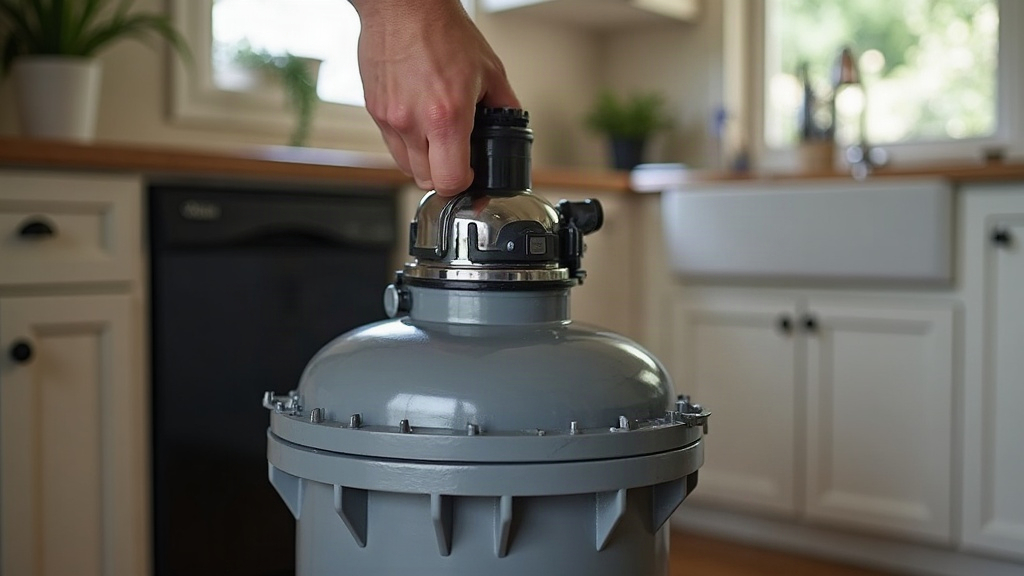
If your garbage disposal hums but refuses to spin when you hit the switch, here’s what’s going on: the motor is getting power just fine, but something is physically stopping the impeller blades from turning. That’s usually a jam, a tripped overload switch, or a motor on its last legs. The good news? This is one of the most common disposal complaints out there, and you can usually fix it yourself in under 15 minutes. No plumber needed.
Why This Happens
That humming-with-no-rotation combo almost always means the motor is trying its best, but the flywheel (the spinning plate holding the impellers) is stuck in place. A few usual suspects:
- A jam from food scraps, bones, fruit pits, glass shards, or a stray utensil that slipped down the drain
- Rust or mineral buildup on the flywheel, especially if the disposal sat unused for weeks
- A tripped internal overload protector (a thermal reset), which cuts power the moment the motor starts overheating
- Worn or seized bearings, something you’ll see a lot in units past the 8-10 year mark
- A stuck impeller caused by hardened grease that’s built up over months
Step 1: Turn Off Power Immediately
Before you go poking around inside the disposal, flip off the wall switch and unplug the unit from under the sink (or just kill the breaker). Never, ever reach into the drain while it’s still connected to power. This is the one rule you don’t want to skip.
Step 2: Use the Hex Key (Manual Turning Tool)
Most disposals, whether it’s InSinkErator, Waste King, or Moen, come with a small hex-shaped wrench that fits into a socket on the bottom center of the unit.
- Find the hex hole underneath the disposal.
- Insert the hex key and turn it firmly, both directions.
- If it feels stuck, apply steady, even pressure. You’ll usually feel the flywheel pop free and start spinning smoothly.
- Pull the key out, restore power, and test the switch.
Lost the original hex key? No problem. Any standard 1/4-inch hex wrench from the hardware store will do the job.
Step 3: No Hex Key? Use a Broom Handle
Here’s an old trick that still holds up: grab a wooden broom or mop handle, slide it down the drain opening, and press firmly against one of the impeller blades. Push in the direction you want it to turn, using the handle as leverage to break the jam free. Just make sure the power is off before you try this.
Step 4: Clear Visible Debris
With the power still off, grab a pair of pliers or tongs (skip the bare-hand approach) and pull out anything you can see lodged near the blades: bottle caps, bones, fruit pits, stray forks, whatever ended up down there. A flashlight helps a lot here, so shine one down the drain before you start digging around.
Step 5: Press the Reset Button
Nearly every disposal has a small red or black reset button tucked on the bottom of the unit, right next to the hex socket. Once you’ve cleared the jam:
- Press the reset button firmly until you feel or hear a click.
- Flip the power back on at the wall switch.
- Run cold water and briefly test the disposal.
If the button won’t stay pressed in and keeps popping back out, the motor’s probably still too hot. Give it 10-15 minutes to cool down, then try again.
Step 6: Test and Run
Turn on the water, flip the switch, and listen closely. If it’s spinning normally now, let it run for 20-30 seconds under cold water to flush out any leftover debris.
When Humming Persists After These Steps
Freed the flywheel, cleared out the debris, hit reset… and it’s still just humming? A few things worth checking:
- Test the outlet with another appliance to rule out an electrical problem before blaming the disposal.
- Check the wiring connection at the bottom of the unit (power off, obviously) for anything loose.
- Consider that the motor may be done for. If the unit’s old and the bearings have seized up, replacing it is almost always cheaper than trying to repair it. A decent mid-range disposal, installed, usually runs somewhere between $100 and $200.
Preventing Future Jams
- Run cold water while using the disposal, and keep it running for about 15 seconds after you’re done
- Skip fibrous stuff like celery and corn husks, plus grease, bones, and eggshells
- Toss in some ice cubes with rock salt now and then to scrub the blades clean
- Use the disposal regularly. Letting it sit idle for long stretches is basically an invitation for rust to build up on the flywheel
Conclusion
A disposal that hums but won’t spin is almost never a dead motor, it’s a mechanical jam nine times out of ten. Grab the hex key, apply a little manual force, hit the reset button, and you’ll probably have it running again in minutes. But if the humming sticks around even after you’ve cleared everything and reset the unit, the bearings have likely given out, and at that point, swapping in a new disposal is usually your best bet.