Cork vs Rubber Underlayment for a Quiet Basement Floor
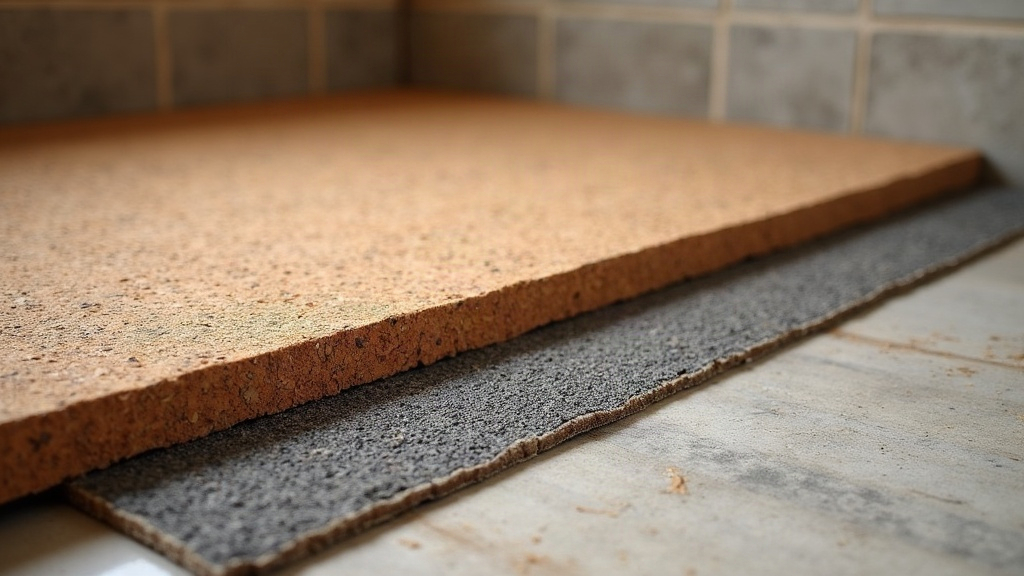
If you’re trying to quiet down a basement floor, here’s the short version: rubber underlayment generally wins for impact noise and moisture resistance, while cork is the better pick for comfort, cost, and sustainability on basements that are already reasonably dry. Neither one will save you from an actual flood. But both will noticeably cut down on footstep noise, echo, and that hollow, drum-like sound you get in most below-grade rooms. Let’s get into how they actually stack up once they’re down on the floor.
Why Basements Need Underlayment in the First Place
Concrete slabs are hard, dense, and frankly terrible at absorbing sound. Drop a toy, roll an office chair, walk across in boots, and that noise bounces around the room and travels straight through the slab into whatever space sits next to it. Underlayment catches that impact energy before it reaches the structure, which lowers two things:
- Impact Insulation Class (IIC) — how much footstep noise makes it through the floor
- Sound Transmission Class (STC) — how much airborne noise, voices, TV, music, gets through
There’s another wrinkle specific to basements: concrete slabs pull moisture up from the surrounding soil. That’s really the reason underlayment choice matters so much more down here than it does on, say, a second-floor bedroom.
Cork Underlayment: The Comfort and Sustainability Pick
Cork comes from tree bark, harvested without cutting the tree down, so it’s renewable and about as eco-friendly as flooring materials get. Its structure is full of tiny air pockets, almost like a sponge, and that’s what gives it both decent acoustic dampening and a soft, springy feel when you walk on it.
Pros:
- Naturally antimicrobial, holds up against mold and mildew in low-to-moderate humidity
- Good thermal insulation, so the basement won’t feel as cold underfoot
- Cheaper option, usually $0.50 to $1.50 per square foot
- Biodegradable, sustainably sourced
Cons:
- Compresses under heavy furniture over the years, which chips away at its acoustic performance
- Not a moisture barrier by itself, you’ll need a separate poly sheet under it in a basement
- Standing water or constant dampness will degrade it
Cork makes the most sense in basements that are already dry, properly graded, and backed up by a sump pump or French drain, used for things like a finished family room, a home office, or a guest bedroom.
Rubber Underlayment: The Performance Pick
Rubber underlayment, often made from recycled tires, is heavier and tougher than cork. It’s the standard choice in commercial gyms and apartment buildings for a reason: it just handles impact noise better than almost anything else.
Pros:
- IIC ratings often 10 to 15 points higher than cork at the same thickness
- Naturally waterproof, and several products double as your moisture barrier
- Won’t flatten or lose shape under heavy furniture or gym equipment
- Lasts 20+ years, shrugs off mold even in humid rooms
Cons:
- Pricier, typically $1 to $3 per square foot
- Some recycled rubber has a rubbery smell at first that fades over a few weeks
- Feels less “natural” to buyers who care about that, though recycled rubber is eco-friendly in its own right
Rubber is the smarter pick for basements doubling as home theaters, gyms, playrooms, or anywhere you already suspect occasional dampness could be an issue.
Side-by-Side: Which Wins Where?
| Factor | Cork | Rubber |
|---|---|---|
| Impact noise reduction | Good | Excellent |
| Moisture resistance | Fair (needs vapor barrier) | Excellent |
| Comfort underfoot | Very soft | Firm, supportive |
| Cost | Lower | Higher |
| Best basement use | Finished living space, office | Gym, theater, playroom, damp-prone areas |
| Longevity | 10-15 years | 20+ years |
Installation Tips for Either Material
- Test for moisture before anything else. Tape a sheet of plastic to the bare slab and leave it for 24 hours. Condensation forming underneath means you need a vapor barrier no matter which underlayment you pick.
- Pair cork with a separate vapor barrier, or go with a rubber product that already has a moisture membrane built in.
- Match the thickness to your flooring. 3mm is pretty standard under laminate or engineered wood; 6-8mm rubber shows up a lot under gym tile or rubber flooring.
- Leave expansion gaps at the walls, following whatever the manufacturer specs. Both materials move a little with temperature and humidity swings.
Final Verdict
If the basement is dry, finished, and gets used like any other room in the house, cork is a solid call: good sound dampening, a bit of warmth, and it won’t break the bank. But if there’s any moisture risk, heavy daily use, or you need maximum noise control (home gym, media room, rental unit, that kind of thing), rubber underlayment is the safer bet and it’ll outlast cork by years. Either way, don’t skip the vapor barrier and don’t skip the moisture test. That one 24-hour check prevents more basement flooring disasters than the underlayment choice itself ever could.